
The Impact of the Renaissance Era to Modern Arts and Design Concepts

Renaissance refers to the time or era following the Middle Ages in Europe wherein there is a great revival of interest in classical learning, behavior, and values of ancient Rome and Greece.

During this period, there was a development of new technologies such as the printing press, exploration of new continents, uprising of great works by excellent artists, and a new system in astronomy.

On top of these, there was also a blossoming of literature, philosophy, and more apparently, arts and design – all of these amidst the political stability, increasing prosperity, and economic improvements. 

Needless to say, the great works and contributions by notable names during the Renaissance era have great influences on modern-day arts and design. To this day, their works remain to be relevant; and their techniques, style, theme, and basic elements are still being used as references despite the emergence of new technology and more current trends. Here are two major fields that had been greatly influenced by the Renaissance period.

Arts

Most of the artworks and paintings from the Renaissance era focus on what people are doing during that time. Such characteristic is referred to as “humanism” because the subjects of the artworks are mostly humans.

Examples of these are the works of world-renowned and famous historical artists Leonardo da Vinci, Raphael, and Michaelangelo who all dominated the era of the High Renaissance.

Leonardo da Vinci is named as the ultimate “Renaissance man” for the intensity of his intellect and talent and his interpretation of classical and humanist values. Two of his masterpieces are the Mona Lisa and the Last Supper.

To this date, modern-day artists still make use of human subjects to convey a message and as a form of expression. Most artists paint images of human faces to express politics and explore other sensitive social or political content.

The best artists and painters of the 20th century who made use of such concept are; Kazimir Malevich who is referred to as “The Supreme Artist”, Pablo Picasso known as the “The Father of Cubism”, Piet Mondrian or “The Abstract Painter”, Frida Kahlo who is known for “Painting Painful Reality” and Jackson Pollock of Abstract Expressionism. 

Architecture and Design

Renaissance architecture is characterized by symmetry, proportion, regularity, and parallel design in the classical orders. Some of the most famous structures from this era that reflect this distinctive character are St. Peter’s Basilica, San Pietro in Montorio, Temple of Vesta, and Florence Cathedral (Basilica di Santa Maria del Fiore). 

Even in this modern time, the use of columns, domes, arches, and symmetrical designs in architectural projects remains to be relevant. These classic elements are apparent in some famed landmarks and properties in Miami.

If you look closely at some hotels, it is quite easy to spot some elements whose reference can be traced way back to the Renaissance period such as the facade of Century Hotel in South Beach, Miami Beach which exudes symmetry and parallel design on its windows, main entrance, arch, and over-all contemporary concept. 

Another example is Cavalier South Beach Hotel along Ocean Drive which features a handful of classic designs that resemble that from the Renaissance era.

The classic black and white pictures of humans that grace the walls and corners, colorful paintings of humans from back in time in every room, sculptured elements, Renaissance-inspired chairs along with the lobby, symmetrical wall design, and other classic details are all tied together by a traditional yet contemporary concept. 

Other hotels that add subtle elements from the Renaissance period are Fontainebleau Miami Beach for its huge pillars and the regularity of its design concept; and Hotel Chelsea for its classic and vintage elements, clean lines, and uniform facade.
How to Add a Touch of Renaissance Design to Modern Homes

Design ideas that are inspired by the Roman and Italian Renaissance era reflect classic appeal, elegance, and timeless beauty. If you want to infuse this principle into a modern home, there are many ways to do so.

In fact, a lot of furniture makers and interior designers can add elements that closely depict distinctive Renaissance design into their works and creations through window designs, drapes, chaises and sofas, ottomans, wooden details, chandeliers, rugs, and the correct choice of fabric.

The availability of such resources makes the idea even more accessible to anyone who adores classic European art and culture. 

There are several ways to plan and prepare for a Renaissance concept. However, it is important to gain a better understanding first of its major characteristics.

Basically, Renaissance design demonstrates a conscious “rebirth” or revival of certain elements of classical thought and material culture. It also depicts the careful development of a particular symmetry and classical orders. To understand this further, here are some basic ideas that can facilitate the planning stages.

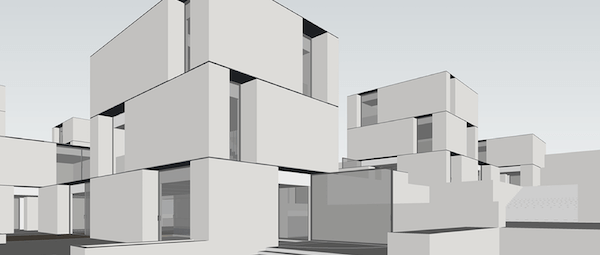
modern structure planning

Develop a contemporary concept for your home

There are many properties all over Miami that feature simple contemporary concepts. These are characterized by modern architecture with a touch of traditional exterior and craftsman touches plus an open floor plan.

Contemporary homes usually feature sleek modern design principles both on the interior and exterior with plenty of windows, symmetrical curves and details, and parallel designs. Finding Miami properties with contemporary design offers a lot of possibilities for aspiring homeowners to carefully plan and develop a Renaissance-inspired atmosphere within their property.

The sleek details, graceful curves, and clean lines that make up a contemporary home are essential and beneficial elements to create a highly feasible design plan. 

1. Minimalist Approach

A Renaissance-inspired home is characterized by classic beauty and timeless elegance. If you want to come up with such a principle, the best way to do so is to stick to the basics.

This refers to adding ornaments that serve a dual purpose (both decorative and functional) such as large mirrors on the walls for design, graceful chandeliers for lighting, large jars or vases to hold indoor plants, and throw pillows to grace the sofa.

The minimalist approach in renaissance design means avoiding multiple tiny ornaments placed over flat surfaces that don’t serve any purpose; but rather choosing a single yet bigger ornamental item that can be highlighted on a specific spot. 

2. Furniture and Rugs

Another way to establish a renaissance feel to a home or property is by adding tangible elements like furniture and rugs. Furniture makers usually come up with designs that are inspired by the Renaissance era and Italian concepts some of which are Kathy Kuo, Anthony Baratta, Noir, Cappellini, and Serena & Lily among many others.

There are accent chairs, accent tables, sideboards, dining sets, and chaises that resemble classic European designs. A renaissance-style rug can tie the entire concept together and adds a touch of elegance.

A large floor rug can also help organize an open floor plan by setting specific boundaries to identify the different parts and purposes of a room. 

3. Color Scheme

Creating a Renaissance-style atmosphere within a home doesn’t necessarily mean using dark colors and earthy hues. In fact, a lot of European designs make use of light yet solid color schemes such as neutral shades of brown and gray and even white and beige as bases against wooden structures. Adding an interesting mix of contrasts can create different layers of design. 

For example; a plain off-white sofa and accent chairs can be decorated with colored throw pillows and placed over a rug with Renaissance-inspired print. Drapes that resemble Gothic designs and colors can add playful elements to a living room and dining room.

A classic chaise covered with dark or printed fabric can be draped with a stylish throw made of light-colored material. The main idea is to use contrasting hues and textures to create several layers of design that are visually appealing instead of using a single color theme.

4. Proportion and Symmetry

Some of the most distinctive characteristics of Renaissance design are proportion, geometry, and the regularity of parts with an emphasis on symmetry. These are vastly demonstrated in the architecture of ancient Roman-like the Pantheon, the Colosseum, St. Peter’s Basilica, and Trevi Fountain.

Basically, if you want to create a Roman Renaissance-inspired concept for your home or property, you should start by paying attention to structural details such as symmetry in the alignment of windows, parallel columns, or pillars that follow a particular order, regularity of parts, and spatial proportion. Other essential elements are based on foundational architecture such as facades, domes, and arches. 

Creating a Renaissance design for your home or property can be initiated by paying attention to the most basic elements which include structural details, contemporary design, and an open floor plan.

The rest can be infused by adding ornaments, furniture, paintings, and various principles which are based on ancient European culture. Creating a minimalist approach while concentrating on the functionality of every detail can likewise make the idea more feasible.

Influence of Renaissance Design to Modern Day Structures and Landmarks

Known as the age of “rebirth” and revival of interest in ancient times, the Renaissance period marks an era that created major contributions in the field of arts, philosophy, mathematics, science, and music.

It was a time in Western European history wherein interest in classical arts was “born anew”.

Moreover, this particular era is also notable for the construction of what we refer to now as historical monuments and distinctive architectural designs and structures all across Rome. 

The Renaissance period has major influences on a lot of building designs and architecture all over the world. There are certain structural elements that could easily be traced way back to the Renaissance period such as symmetry of windows, alignment of structures, use of parallel elements, and extensive use of columns.

Even the relatively new and subsequent architectures didn’t just come out of nowhere. Most of their design concepts were greatly influenced by Renaissance styles. These characteristics are likewise present in some of Miami’s notable landmarks.

Landmarks and Architectural Structures in Miami with Renaissance Designs

  • Vizcaya Museum & Gardens in Miami

The Vizcaya Museum & Gardens in Miami is an Italian Renaissance-inspired estate that was built in 1916. It was originally constructed to serve as the winter residence of industrialist James Deering.

It consists of more than 10 acres of expansive formal gardens with fountains surrounding a villa. It consists of 34 rooms that feature 15th through 19th-century antique furniture and ornamental designs.

Vizcaya is officially designated as a national historic landmark in Miami-Dade County by the National Register of Historic Places. 

Entering the vicinity will make you feel like you’ve traveled back in time with its classical and romantic themes and stunning renaissance concept.

The place in itself reflects the era of classic “rebirth” from its huge parallel columns, antique furniture, massive open space, stone structures, and breathtaking views. 

  • The Venetian Pool

The Venetian Pool is a huge and lavish Italianate swimming pool that is open to the public. It was formerly a stone quarry that contains over 800,000 gallons of spring-fed water.

The Italian-inspired design and historical aura make it one of the most distinctive places to visit in Miami. It is currently regarded as a historic U.S. public swimming pool because of its elaborate history. 

Being in this place makes you feel that you are in an entirely different era or in a faraway Mediterranean land with its wrought-iron balconies, symmetrical design of ornamental elements, antique pots and lamp posts, terra cotta roofs, and stucco buildings.

The Venetian-Style Bridge and classic mooring posts add a touch of Italian Renaissance design to this landmark and serve as some of the highlights. Guests can literally swim amidst caves and waterfalls and enjoy the picturesque classic backdrop. To date, it is listed as a National Historic Landmark. 

  • The Villa, Casa Casuarina
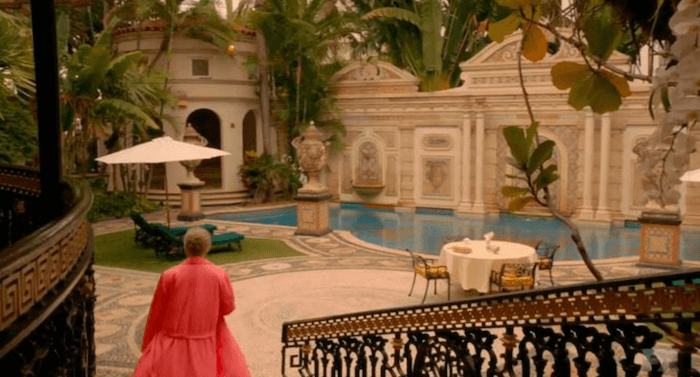
versace house
Versace’s house.

Also known as the Versace Mansion, Casa Casuarina is a property that was built in 1930. Since 2015, it has started to operate as a luxurious hotel. It features Mediterranean Revival style which is a design concept that incorporates references from Spanish Renaissance, Italian Renaissance, Spanish Colonial, and Arabic Andalusian architecture among other design influences. 

Casa Casuarina features grandiose entrance steps where Italian fashion icon Gianni Versace was shot by serial killer Andrew Cunanan. Other highlights include the romantic balcony, stunning details such as plant pots and metallic railings, wall design concepts that include fruit bowls and pine cones, Renaissance-inspired alleyways, and other perimeter wall designs.